
Fireplace & Chimney Cleaning Cornelius
Request a Free Estimate
Tell us what prompted your request.
1
Step 1
keyboard_arrow_leftPrevious
Nextkeyboard_arrow_right
Fireplace and Chimney Cleaning for Cornelius Properties


Fireplace and Chimney Cleaning in Cornelius, Quoted Per System
A single price for "a chimney" assumes every chimney is one thing. Plenty of properties have more than one appliance venting through the same stack, or a wood-burning firebox on one floor and a gas unit somewhere else, and each of those is its own system with its own scope.
That is why a Cornelius request starts with what you have rather than what a price list says. The plan depends on the appliance and its fuel, the number of fireplaces or flues involved, how the system is configured, when it was last serviced, and what can be safely reached. Willard Power Vac has been doing specialized cleaning work since 1975, and the reason we ask before quoting is not paperwork. It is that a blanket number either overcharges the simple job or turns into a revised figure once someone is standing in front of the real one.
Good Reasons to Book a Chimney Sweep
Most requests come from one of a few situations, and all of them are reasonable starting points. You burn regularly through the cold months and want deposits dealt with before the next season. You took over a property and have no record of when the system was last touched. Or something changed: smoke rolling into the room, a smell you have not had before, debris in the firebox.
Any fuel-burning system benefits from an annual professional inspection, which is separate from cleaning and worth arranging on its own schedule. The three prompts below cover most of what brings people to this page.
- You burn through the season and want deposits removed before the next one
- Nobody can tell you when the system was last cleaned or inspected
- Something changed: smoke, odor, or debris you did not have before
List each fireplace or appliance, what it burns, how many flues are involved, the last service you know of, anything you have noticed, and what access looks like. That is enough for a scope you can actually compare.
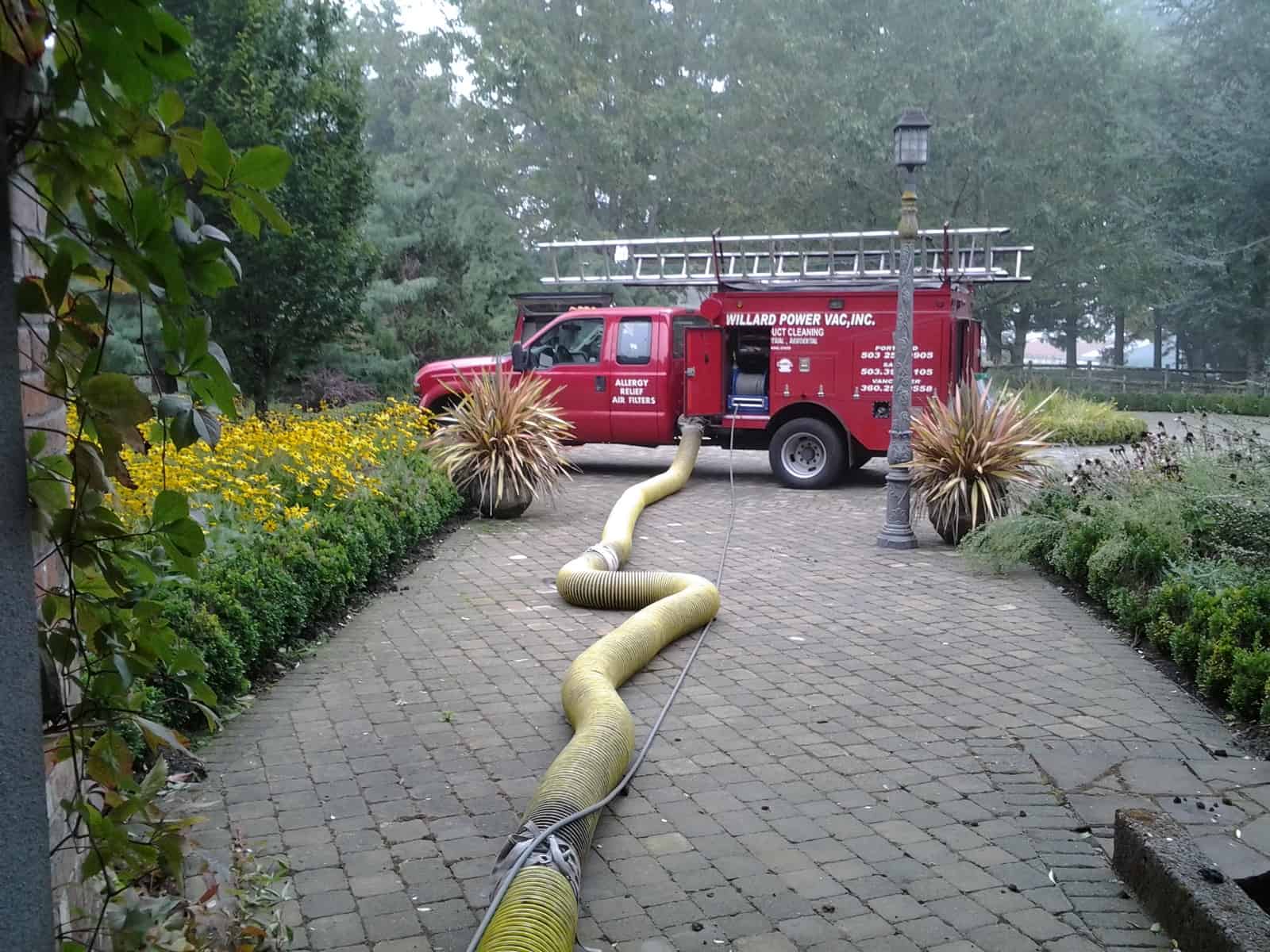
What Chimney Cleaning Removes, and What It Leaves
Cleaning removes reachable soot, creosote, and loose debris from inside the system that was quoted. Creosote is the residue left behind by burning wood, it builds up along the flue over time, and removing what can be reached is the entire point of the visit.
Along the way, whoever is doing the work will talk with you about what they found: how heavy the deposits were, whether anything is obstructing the passage, and anything that looked worth a closer look by an appropriate professional. If the system shows possible damage or a venting concern, you get told and pointed toward the right kind of evaluation.
What cleaning leaves behind is condition. Removing deposits is not the same as establishing that a structure is sound, and this page is careful not to sell one as the other.
Why a Sweep Is Not an Inspection
If someone cleaned it, does that mean it was checked? No, and the two get confused constantly.
Cleaning and inspection are related services, but they are not interchangeable. Cleaning removes reachable deposits from the system in front of the crew. An appropriate inspection evaluates the condition of that system, which is a different task with a different purpose. A flue can come out of a cleaning perfectly clear and still have a problem that only an inspection would surface.
So we will tell you what was cleaned and what was seen, and we will not declare a chimney safe on the strength of a cleaning. Arranging an annual professional inspection of any fuel-burning system is the sensible companion to this work, not a competing product.
What Cleaning Does Not Repair or Certify
The limits here are firm, and you should expect them from anyone honest.
Cracks, failed liners, leaks, flashing, caps, masonry, and appliance defects sit outside a cleaning scope. If any of those turn up, the answer is a referral to a provider qualified for that work, not a repair quote written on the spot. Structural chimney repair is not part of this service. Neither is carbon-monoxide diagnosis, which needs proper equipment and the right trade. And there is no guarantee of fire prevention or carbon-monoxide safety attached to a cleaning, because no cleaning can deliver one.
Certifying a system nobody has properly inspected is also off the table. If you need documentation of condition, that comes from an inspection by someone qualified to give it.
Every Flue Gets Its Own Scope
Think about how differently two requests can read. One says "one wood-burning fireplace, swept two winters ago, single stack, easy ground access to the roof line." The other says "two fireplaces plus a gas appliance, no idea when anything was last done, and the roof is steep." Both are welcome. They are not the same estimate.
Four details do most of the work: what the appliance is and what it burns, how many fireplaces or flues are involved, what roof and chimney access looks like, and when it was last inspected or cleaned along with anything you have noticed since. Gas, wood, and pellet systems are not interchangeable, and a property with several flues gets each one scoped rather than lumped together. Guessing at any of it just moves the conversation to the day of service. If you are already lining up other work on the property, the reachable heating and cooling runs fall under air duct cleaning in Cornelius, and those can be discussed in the same conversation.
Planning Service for Cornelius Homes and Businesses
Tell us what prompted your request.
Request a Free Estimate
Tell us what prompted your request.
1
Step 1
keyboard_arrow_leftPrevious
Nextkeyboard_arrow_right
Cornelius Fireplace and Chimney Cleaning FAQs
How often should a chimney be cleaned?
Cleaning frequency follows use, not a fixed rule, so how much you burn and what you burn matter more than the calendar. Inspection is different: arranging an annual professional inspection of a fuel-burning system is sound practice regardless of how often it gets swept.
We hardly ever use the fireplace. Does it still need attention?
Light use lowers how fast deposits build, but it does not remove the value of an annual inspection, and it does not tell you the condition of a system nobody has looked at. Tell us how much it gets used along with when it was last serviced, and that shapes the recommendation.
What is creosote, and does cleaning get rid of it?
Creosote is residue that burning wood leaves along the flue. Cleaning removes what is reachable within the quoted system, along with soot and loose debris. Whatever sits behind damaged or inaccessible sections is a condition question rather than a cleaning question.
After the cleaning, can you tell me the chimney is safe to use?
No. We will tell you what was cleaned and what was observed, but declaring a chimney safe requires an appropriate inspection, and certifying an unseen system is not something this service does. There is also no guarantee against fire or carbon-monoxide exposure attached to a cleaning.
If you find damage, will you fix it?
Not as part of this service. Cracks, failed liners, leaks, flashing, caps, masonry, and appliance defects are outside the cleaning scope, and structural repair is not offered here. You get told what was seen and pointed toward a provider qualified to evaluate and address it.
Our fireplace is gas. Does that change the request?
It changes the scope, so say so up front. Appliance and fuel type is one of the first things the estimate depends on, along with how many flues are involved and how the system is configured. A gas appliance and a wood-burning firebox in the same building get scoped separately.
Before We Arrive, and When to Stop Burning
Let the fireplace go completely cold well ahead of the appointment. Move anything portable away from the hearth, put pets somewhere else for the duration, and make sure the appliance itself can be reached. Please do not get on the roof to check anything for us.
If you suspect a venting problem or visible damage, stop using the appliance and arrange an appropriate evaluation before burning again. That is the conservative call and it is the right one. Keep carbon-monoxide alarms installed and maintained regardless of when the system was last serviced, since that protection is not something a cleaning provides.
Other exhaust systems on the property are their own jobs. A restricted laundry exhaust line, for instance, is covered under dryer vent cleaning in Cornelius, and heating equipment surfaces fall under AC and furnace cleaning in Cornelius.
Send Your System Details for a Free Cornelius Estimate
List each fireplace or appliance, what it burns, how many flues are involved, the last service you know of, anything you have noticed, and what access looks like. That is enough for a scope you can actually compare.