
Fireplace & Chimney Cleaning Kent
Request a Free Estimate
Tell us what prompted your request.
1
Step 1
keyboard_arrow_leftPrevious
Nextkeyboard_arrow_right
Fireplace and Chimney Cleaning for Kent Properties


Do You Need a Chimney Cleaning in Kent, or an Inspection?
That is usually the real question behind a call about a fireplace, and the two are not the same purchase. Cleaning removes reachable soot, creosote, and loose debris from the system being quoted. An inspection evaluates condition, which is a different job with a different purpose. Plenty of companies blur the line, then attach a repair quote before anyone has agreed to anything. We would rather establish which one you are actually asking for. Willard Power Vac was established in 1975, works on homes and businesses in Kent, and quotes each fireplace or flue at no charge. If deposits are the issue, that is our work. If your concern is whether the system is sound, we will say so and point you toward an appropriate inspection. Either conversation starts the same way, with a short description of the appliance and the thing that prompted the call.
Reasons People Book a Chimney Sweep
Three ordinary situations bring in most requests, and none of them require you to already know what is wrong. Fuel-burning systems should be professionally inspected every year, and cleaning often gets arranged around that habit. Past the annual rhythm, the calls tend to come down to what a season of burning left behind, or a system whose history nobody can account for. Send the reason in your own words. A couple of sentences about the appliance and the concern is plenty to start a useful conversation.
- A burning season has finished and deposits have built up in the flue
- You have taken over a property and nobody can say when the system was last serviced
- Something has changed, such as smoke pushing back into the room or an odor from the firebox
List each fireplace or appliance, what it burns, how many flues are involved, the last service you know about, any concern you have noticed, and how reachable the system is. Every system gets its own scope and its own number, with the deposit question and the condition question kept clearly apart.
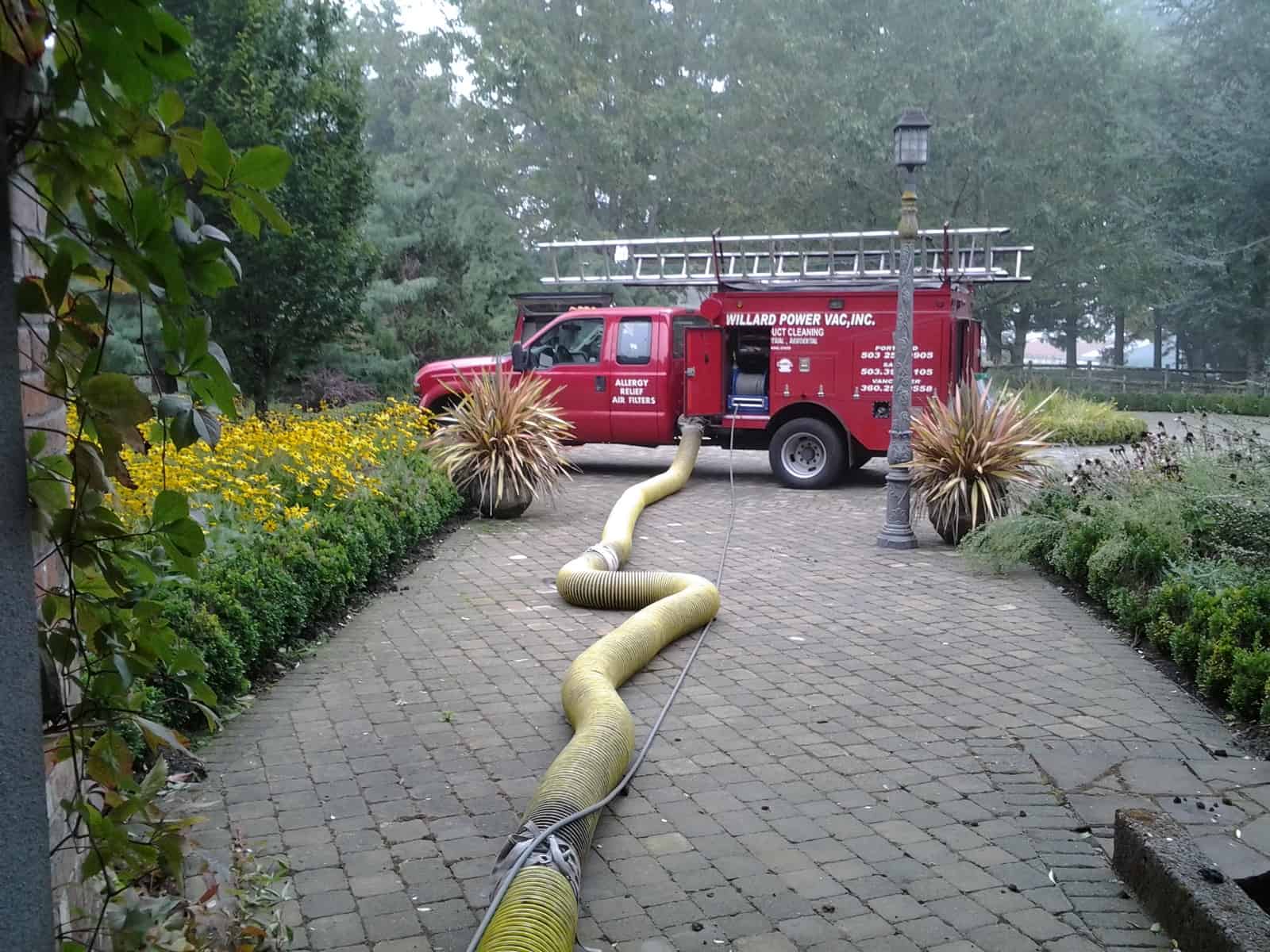
What Fireplace and Chimney Cleaning Removes
In practical terms, a sweep is the removal of reachable soot, creosote, and loose debris inside the system we have quoted. Creosote is the tarry residue wood smoke leaves on flue walls as it cools. Soot is the finer black powder that comes along with it. Both accumulate with use, and both are the target of the visit. Scope is written per system, so one fireplace and a separate stove get quoted on their own lines rather than bundled into a single figure. The service also covers talking through anything reachable and obstructing that turns up, plus a referral toward an appropriate inspection if damage or venting concerns appear while we are on site. What it does not cover is a verdict on the parts nobody has properly examined.
Cleaning and Inspection Are Not the Same Job
A common assumption is that a clean chimney is a safe chimney. It is not that simple. The two services are related, but they are not interchangeable, and neither one substitutes for the other. Taking out deposits addresses build-up. Working out whether a liner has failed, whether masonry has cracked, or whether an appliance is venting properly is a separate assessment with separate requirements. We will not call a system safe on the strength of a sweep, because that would mean certifying something nobody evaluated. If the condition question is what is bothering you, ask for that directly and we will tell you where it belongs.
Where Cleaning Stops and Repair Begins
Picture a visit where the firebox comes open and there is a crack running through the masonry, or a liner that has clearly given way. The honest move at that point is to stop and tell you. Cracks, failed liners, leaks, flashing, caps, masonry, and appliance defects all sit outside this scope. We do not perform structural repair, we do not diagnose carbon monoxide, and we will not guarantee that a sweep prevents a fire or a carbon-monoxide exposure. You get a plain description of what was visible and a pointer toward a provider qualified for that kind of work. Heating equipment is its own matter as well, quoted under AC and furnace cleaning in Kent.
What Sets the Price for Your System
Why not just quote a flat rate over the phone? Because the plan depends on the appliance, the fuel it burns, how many fireplaces or flues are involved, how the system is put together, when it was last serviced, and how reachable it all is. One wood-burning fireplace is a different scope from a wood stove plus a second flue serving another appliance. A gas appliance is a different conversation again. So each fireplace or flue gets a scope of its own rather than a blanket figure meant to cover whatever we happen to find. Service history matters as well. A system swept last spring and one nobody has touched in a decade can call for very different amounts of time on site, and time is most of the cost. Tell us the setup and the estimate follows it. If the building’s ductwork is due for attention too, that carries its own scope under air duct cleaning in Kent.
Planning Chimney Service for Kent Homes and Businesses
Tell us what prompted your request.
Request a Free Estimate
Tell us what prompted your request.
1
Step 1
keyboard_arrow_leftPrevious
Nextkeyboard_arrow_right
Kent Fireplace and Chimney Cleaning FAQs
How often should a chimney be cleaned in Kent?
Arrange a professional inspection of fuel-burning systems every year, and let what that turns up drive the schedule rather than a calendar guess. How quickly deposits accumulate depends on the appliance, the fuel, and how much the system actually gets used. A fireplace burning most winter evenings and one lit twice a year are nowhere near the same case.
What is creosote, and why does it matter?
Creosote is the tarry residue wood smoke deposits on flue walls as it cools, and it builds up the more a system is burned. Removing the reachable portion of it, along with soot and loose debris, is the whole point of the visit. We will tell you what came out. We will not turn that into a promise about fire risk in your building.
We barely use our fireplace. Does it still need attention?
Light use slows how fast deposits accumulate, but it does not answer the condition question. Annual professional inspection of a fuel-burning system is still the guidance, because liners, masonry, and venting can change without anyone lighting a fire. Give us the last known service date and anything you have noticed, and we will tell you what is worth doing.
Do you need to get on the roof?
Roof and chimney access is one of the details we ask about, because it shapes both the plan and the price. What matters right now is that you describe the access from the ground, not that you go up and check it yourself. We will never ask a customer to climb onto a roof for an estimate. A photo from ground level helps if you have one, along with a note about the height and anything sitting around the base of the structure.
Does a gas appliance need something different?
The appliance and its fuel change the scope, which is exactly why we ask before quoting anything. List each appliance, what it burns, and how many flues are involved, and each one gets a defined scope. Fuel also changes the deposits involved, which is part of why a scope written for one appliance does not transfer to another. Defects in the appliance itself fall outside this service and belong with a qualified provider.
Can you tell me whether my chimney is safe?
Not on the strength of a sweep, no. Declaring a system safe calls for an appropriate inspection, and certifying something nobody has properly examined is not something we offer. We can tell you which deposits came out, which areas were visible while we worked, and where a proper evaluation belongs.
Getting Ready, and When to Stop Using the Fireplace
People often assume they should climb up and take a look first. Please do not. Nothing we need from you calls for a ladder. Before the appointment, let the fireplace go fully cold, move loose items away from the hearth, put pets somewhere else in the building, and make sure the appliance can be reached. If you suspect a venting problem or damage, the conservative choice is to stop using the system and have it evaluated before burning again. Keep carbon-monoxide alarms installed and maintained regardless of everything else going on. And if the laundry exhaust has been on the list, that is a separate run covered by dryer vent cleaning in Kent. Send your details through the free estimate request and we will scope it.
Request a Free Estimate for Kent Fireplace and Chimney Cleaning
List each fireplace or appliance, what it burns, how many flues are involved, the last service you know about, any concern you have noticed, and how reachable the system is. Every system gets its own scope and its own number, with the deposit question and the condition question kept clearly apart.