
Fireplace & Chimney Cleaning Turner
Request a Free Estimate
Tell us what prompted your request.
1
Step 1
keyboard_arrow_leftPrevious
Nextkeyboard_arrow_right
Fireplace and Chimney Cleaning for Turner Properties


Fireplace and Chimney Cleaning for Turner Properties
A sweep is not one standard service with one standard price. That assumption causes most of the frustration people bring to this subject. An open wood-burning firebox, a stove insert, a freestanding stove, and a gas appliance are four different situations, and a property with two of them has two scopes rather than one.
Which is why a Turner request starts by asking what you own and how many flues serve it, followed by how the system has been used and what you have noticed. Willard Power Vac was established in 1975 and works on residential and commercial properties. The estimate that comes back describes the specific system you told us about, and it says plainly what deposit removal does and does not include.
Three Reasons to Schedule a Chimney Sweep
A house changes hands in August and the new owner finds a firebox with a thick black coat and no paperwork anywhere. That is one of three common starting points, and all three are worth naming in the estimate form. Arranging an annual professional inspection of a fuel-burning system is sound practice on its own, and deposit removal is usually scheduled in step with it. If your situation does not match any of the three, describe it in plain words instead. Nothing is lost by telling us more than we asked for.
- The season is coming and the system has been burning regularly
- The property is new to you and no service record exists
- Something has been noticed: soot, odor, debris, or a poor draft
Name each appliance, the fuel it burns, the number of flues, the last service you can account for, and the access available. A free estimate comes back written for that system, with the boundaries of the work spelled out.
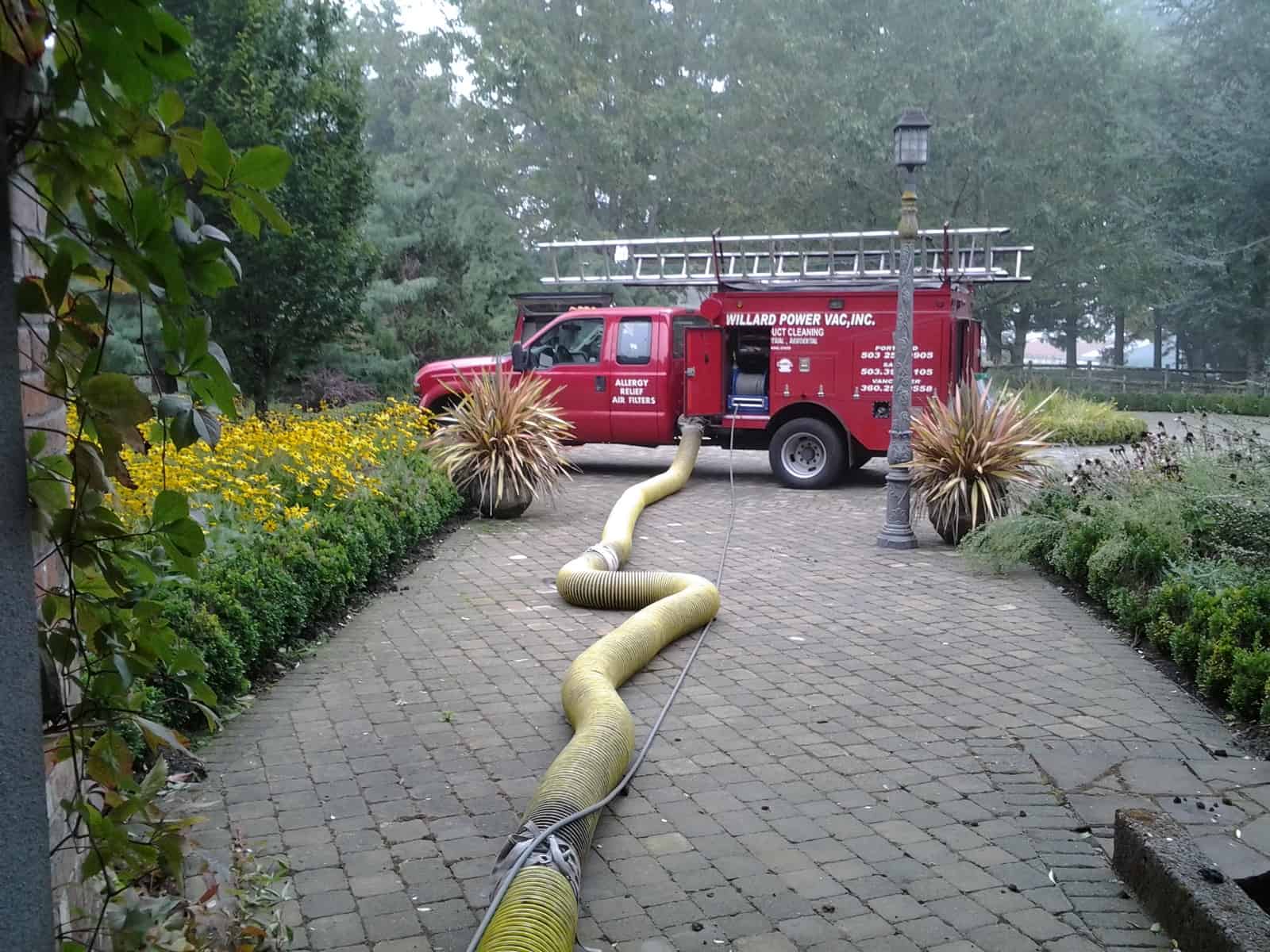
What Comes Out of the Flue
Deposit removal covers the reachable soot, creosote, and loose debris inside the system quoted, meaning the firebox and the flue serving it. Creosote is the residue wood leaves behind. Soot is the finer material that comes with it. Both accumulate on surfaces inside the system, and both are what a sweep physically takes out.
Each fireplace or flue carries its own scope, so a stove on one level and an open hearth on another are quoted as two pieces of work even when they share a roof. Other venting on the property is separate again. Laundry exhaust, for instance, is priced through dryer vent cleaning in Turner. Grouping several requests in one message is fine and often quicker, as long as everyone understands they are separate jobs.
Chimney Cleaning and Chimney Inspection, Defined
Two words get used as if they were interchangeable, so here is each one on its own terms.
Cleaning means removing reachable deposits from the system. It is measured by what comes out. Inspection means evaluating the condition of the system itself, which is a judgment about the structure rather than a removal task, and it carries different qualifications.
The two are related, and they are not substitutes. A swept flue has had deposits taken out of it. It has not been declared safe, and we will not declare it safe on the strength of a sweep. If something during the visit suggests damage or a venting concern, you get told about it and pointed toward an appropriate evaluation. That referral is part of the service, not an upsell attached to it.
Can You Repair It While You Are Here?
No, and the reason is worth stating rather than mumbling. Structural repair sits outside this service. So does carbon-monoxide diagnosis. Cracks, failed liners, leaks, flashing, caps, masonry, and appliance defects are all outside a sweep’s scope, and a company that offers to handle every one of them on the spot is offering something other than what it advertised.
We also will not guarantee that fire or carbon-monoxide exposure has been prevented, and we will not certify a system as safe without appropriate inspection. Keep carbon-monoxide alarms installed and maintained regardless of who last worked on the property. If the heating equipment rather than the hearth is your actual concern, that is quoted through AC and furnace cleaning in Turner.
Five Details Behind a Chimney Cleaning Quote
The plan depends on a short list, and you can supply most of it from memory. Send these five and the estimate stops being a range:
If two or three of them are blank, send it anyway. Working out the fuel type or counting flues is part of the conversation, not a requirement for starting one. What we would rather avoid is quoting a number that assumes one fireplace and one simple system, then revising it in your driveway. If the same property also runs forced-air heating, the ductwork is its own service, priced at air duct cleaning in Turner.
- The appliance and the fuel it burns
- How many fireplaces or flues are on the property
- How the system is configured, as far as you know it
- The last cleaning or inspection you have a record of
- What access exists at the roof and the chimney
Fireplaces at Home and at Work in Turner
Tell us what prompted your request.
Request a Free Estimate
Tell us what prompted your request.
1
Step 1
keyboard_arrow_leftPrevious
Nextkeyboard_arrow_right
Turner Fireplace and Chimney Cleaning FAQs
We only light a few fires a year. Does this still apply?
Light use changes how much builds up, not whether the system deserves attention. Arranging an annual professional inspection of a fuel-burning system remains sound practice, and how much deposit removal that turns into depends on what is actually in there.
Do you handle wood stoves and inserts, or only open fireplaces?
Tell us the appliance and the fuel when you write in. The appliance type, the fuel, and the configuration determine the scope, which is exactly why the question gets asked before a number is offered rather than after.
There are two fireplaces here. Is that a single price?
No. Each fireplace or flue gets a defined scope of its own, because a stove and an open hearth are different work even in the same building. Sending both in one request is still the efficient way to do it.
Does somebody have to get on the roof?
That depends on the system and the access available, which is one of the details we ask about up front. What we will say clearly is that it is not your job. Describe what you can see from the ground and leave the rest of it to the visit.
What happens if damage turns up during the visit?
You hear about it in plain terms, and you get pointed toward an appropriately qualified provider. Cracks, failed liners, leaks, flashing, caps, masonry, and appliance defects are outside this scope, and describing a concern is not the same as diagnosing it.
The fireplace smells in summer. Would a sweep fix that?
Deposits are one possible source, and removing reachable soot and creosote is what the service does. We will not promise it resolves an odor. If the smell points toward a venting or condition problem, that needs an appropriate evaluation instead.
Getting Ready, and When to Stop Burning
Let the fireplace go completely cold ahead of the appointment. Move the movable things away from the hearth, put pets somewhere else for the duration, and make sure the appliance itself can be reached. Nobody should climb onto a roof on our behalf, and we will not ask you to.
One piece of guidance carries more weight than the rest. If you suspect a venting problem or visible damage, stop using the appliance and arrange an appropriate evaluation before lighting it again. Waiting until the next convenient weekend is the wrong instinct here. Keep carbon-monoxide alarms working in the meantime. When you are ready, the free estimate request is where to list each appliance, its fuel, the flue count, the last service you know of, the concern behind the call, and the access available.
Send Your Turner Fireplace Details
Name each appliance, the fuel it burns, the number of flues, the last service you can account for, and the access available. A free estimate comes back written for that system, with the boundaries of the work spelled out.