
Fireplace & Chimney Cleaning Carson
Request a Free Estimate
Tell us what prompted your request.
1
Step 1
keyboard_arrow_leftPrevious
Nextkeyboard_arrow_right
Fireplace and Chimney Cleaning for Carson Properties


Fireplace and Chimney Cleaning in Carson, Quoted per System
Fireplace and chimney cleaning in Carson gets quoted per system, not per address. That is the short version of how we work, and it answers the objection we hear most often, because nobody wants a blanket number attached to a property that might have one firebox or three. The work removes reachable soot, creosote, and loose debris inside the system being quoted. Before any of that, we need to know what is burning and venting, since a gas insert, a wood-burning firebox, and a stove on its own flue are not the same job. Willard Power Vac has served residential and commercial properties since 1975. What you will not get is a repair upsell dressed up as a safety warning.
Reasons to Book a Chimney Sweep
The fireplace worked fine last winter, the house changed hands two summers ago, and nobody knows when the flue was last touched. That is a perfectly normal reason to call, and it does not require a dramatic symptom first. Most requests come down to one of three situations, and if what you describe points toward an inspection more than a sweep, we will say that instead of booking the visit.
- You burn regularly and want deposits removed before another season of use.
- You took over the property and have no service history for the system.
- Something changed: an odor, a draft that behaves differently, or debris in the firebox.
List every appliance or fireplace at the property, the fuel each one burns, how many flues are involved, the last service you know about, any concern that prompted the call, and how reachable the roof and flue are. That is enough to put a scope and a price against each system instead of quoting the building as a whole. Requesting the estimate costs nothing.
What Chimney Cleaning Removes
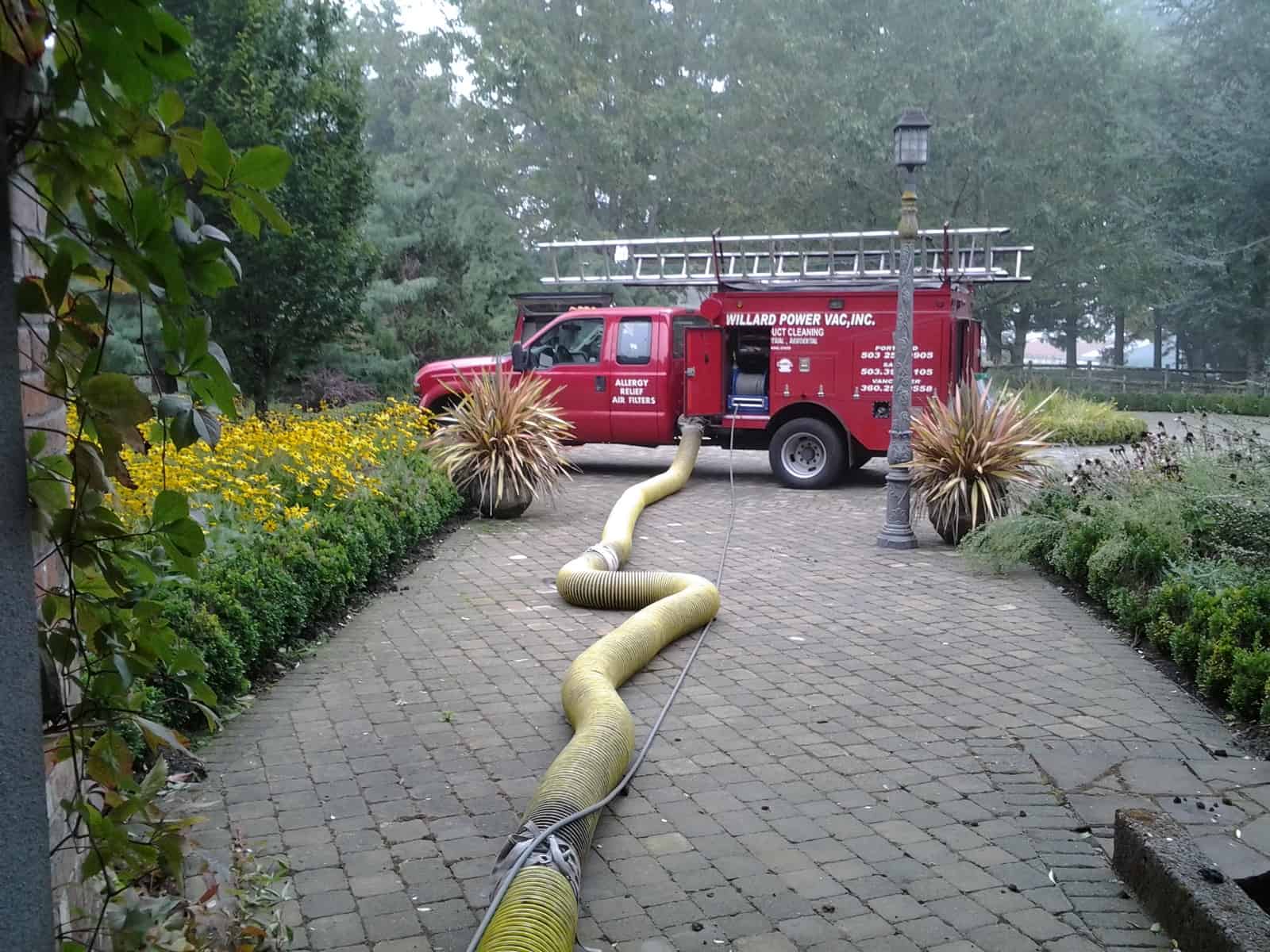
A sweep is deposit removal inside a defined system. Combustion leaves soot and creosote on the surfaces smoke passes over, and those deposits, together with loose debris and accessible obstructions, are the target of the visit. The scope stops at the edge of whatever is named in the quote: one firebox and its flue, or several, each with its own price. We talk through the findings, including obstructions that can be reached and the general state of the deposits, so nobody is guessing about how much came out. Heating ductwork is a different matter, since ash and soot behave nothing like the dust in a forced-air system, and air duct cleaning in Carson carries a separate quote.
Chimney Cleaning Versus Inspection
Plenty of people use sweep and inspection interchangeably. They are related services, and they are not the same thing. A sweep takes reachable deposits out of the flue being serviced. An appropriate inspection evaluates the condition of that system, which is a different question answered by a different method. The distinction has a practical edge: a clean flue is not automatically a sound flue, and we will not call a chimney safe on the strength of a sweep. If anything during the visit suggests damage or a venting concern, you get pointed toward an inspection rather than handed a reassuring sentence. Arranging annual professional inspection of fuel-burning systems is the guidance we stand behind.
What a Sweep Does Not Repair or Certify
Here is the line, stated once and plainly. Structural chimney repair is not part of this service, and neither is carbon-monoxide diagnosis. Cracks, failed liners, leaks, flashing, caps, masonry work, and appliance defects all sit outside the scope, and describing one to you is not the same as diagnosing it. We do not certify an unseen system as safe, and we do not guarantee prevention of fire or carbon-monoxide exposure, because no honest company can. Keep carbon-monoxide alarms installed and maintained regardless of who cleaned what and when. When a repair or condition question comes up, the answer is a referral to an appropriately qualified provider, not a quote from us.
Which Details Set the Price per Flue
Why would two similar houses get different numbers? Because the price follows the system rather than the street. The details that move it are the appliance and the fuel it burns, how many fireplaces or flues are involved, how it is all put together, when it was last serviced if anyone knows, and how reachable the roof and the chimney are. Send those and the estimate stops being guesswork. If you also want the heating and cooling equipment reviewed while a crew is at the property, AC and furnace cleaning in Carson is a separate scope you can raise in the same message. The clothes dryer exhaust also vents to the outdoors and is worth asking about at the same time, though it falls under dryer vent cleaning in Carson.
Carson Fireplaces, Businesses, and Multiple Flues
Tell us what prompted your request.
Request a Free Estimate
Tell us what prompted your request.
1
Step 1
keyboard_arrow_leftPrevious
Nextkeyboard_arrow_right
Carson Fireplace and Chimney Cleaning FAQs
How often should a chimney be cleaned?
It follows how much you burn and what you burn, so there is no one answer for every property. The steady guidance is to arrange annual professional inspection of fuel-burning systems; how often deposits need removing then comes out of that, since a sweep and an inspection answer different questions.
We barely use the fireplace. Do we still need anything?
Light use means fewer deposits, which is not the same as nothing to check. Obstructions and debris can accumulate in a flue that sees very little fire, and a system sitting idle is exactly the kind nobody has looked at recently. The annual inspection guidance still applies.
What is creosote, and is soot the same thing?
Both are combustion residue left on the surfaces smoke travels over, and creosote is the one that concerns people most. Removing reachable soot, creosote, and loose debris is what a sweep does. Neither the presence nor the absence of deposits tells you whether the structure itself is sound.
Will you tell me the chimney is safe when you finish?
No, and be careful with anyone who does. We can describe the deposits that came out and the conditions we could see. Declaring a system safe requires an appropriate inspection, and certifying an unseen system is not something we do.
Do I need to get on the roof or open anything before the visit?
No. We ask about roof and chimney access when the estimate is put together precisely so nobody has to improvise on the day. Your part is letting the fireplace cool, clearing the area in front of it, and making the appliance reachable.
Can you handle more than one fireplace at the same property?
Yes. Each appliance or flue gets its own defined scope and its own line in the estimate, which is why the number of fireplaces is one of the first things we ask about. That holds for homes and for commercial properties, and the estimate itself is free.
Getting Ready, and When to Stop Using the Fireplace
Preparation takes a few minutes. Let the fireplace go completely cold ahead of the appointment, clear movable items from the area in front of it, put pets somewhere else in the building, and make sure the appliance can be reached. Nobody will ask you to climb onto a roof to check something on our behalf. If you suspect a venting problem or you can see damage, the conservative move is to stop using the appliance and arrange an appropriate evaluation before the next fire rather than burning through the season and hoping. Keep carbon-monoxide alarms working. None of that adds up to a safety guarantee, and we would rather be straight about it than sell reassurance.
Get a Carson Fireplace and Chimney Cleaning Estimate
List every appliance or fireplace at the property, the fuel each one burns, how many flues are involved, the last service you know about, any concern that prompted the call, and how reachable the roof and flue are. That is enough to put a scope and a price against each system instead of quoting the building as a whole. Requesting the estimate costs nothing.